by Rose Oie
Nebraska’s Triangle J Ranch is known throughout the country for producing cattle that perform throughout the beef supply chain. The Line family has been building this family business for seven generations, with a steady focus on the future.
Darby Line is the first to tell you he’s all about looking ahead while still appreciating all that was built before him. At Triangle J Ranch near Miller, Nebraska, seven generations of the Line family have made their living through the cattle business. The operation began in 1887, when making breeding decisions to retain and grow a herd looked far different than it would today.
Cattle have changed over the years and so has the way the Lines go about progressive ranching. What’s stayed constant is the emphasis on producing cattle for the people who buy them. Darby and his wife, Anette, have five sons, Travis,
Dillan, Jason, Creyton, and Braxton. Several sons have returned to the ranch to contribute to the family business and help carry it to the next generation. For Darby, the opportunity to continue the family’s legacy and build on more than a century of cattle production is something he does not take lightly.
“My parents, my grandparents, left me a tremendous base and stability,” Darby said. “I think that’s about all I can leave them [my kids]. It’s a start because it’s so hard to get started in the cattle business, if you don’t have a little bit of help.”
Triangle J began with Shorthorn cattle before Darby’s grandfather transitioned to Herefords. His father later added Angus genetics and began working with crossbred cattle. Darby’s own path into the Simmental breed began while he was still in high school.
He purchased his first Simmental bull and later bought several 4-H projects, bringing Simmental cattle into the operation at a time when the breed looked quite different than it does today.
“We bought some Simmental cattle back when they were more red and white spotted cattle at that time,” Darby said.
The Lines soon had an opportunity to acquire some of the early black Simmental genetics available in the breed, including genetics from breeders such as Jim Lehman as those herds dispersed.
From there, the operation continued to develop its own direction. Today, Triangle J works with both purebred Simmental and SimAngus genetics, with goals to provide commercial producers with bulls that fit a wide range of production systems.
Darby sees flexibility as one of the breed’s greatest strengths. “I think the breed is very diversified, especially now,” he said. “We’re able to find calving ease genetics, along with low birth weights now, where maybe it was strictly more of a growth-oriented breed earlier in time.”
That change has allowed Triangle J to satisfy customers with very different goals. Some are looking for growth and carcass performance. Others need heifer bulls or want to maintain a percentage of Simmental influence in their cow herd. “There’s just so many ways that you can use a Simmental bull, whether it’s a half-blood or a purebred, to satisfy your customer’s needs,” Darby said.
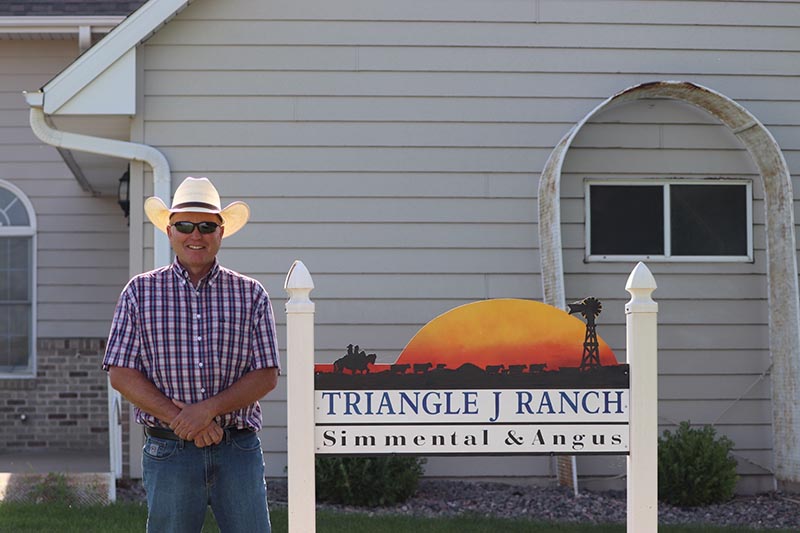
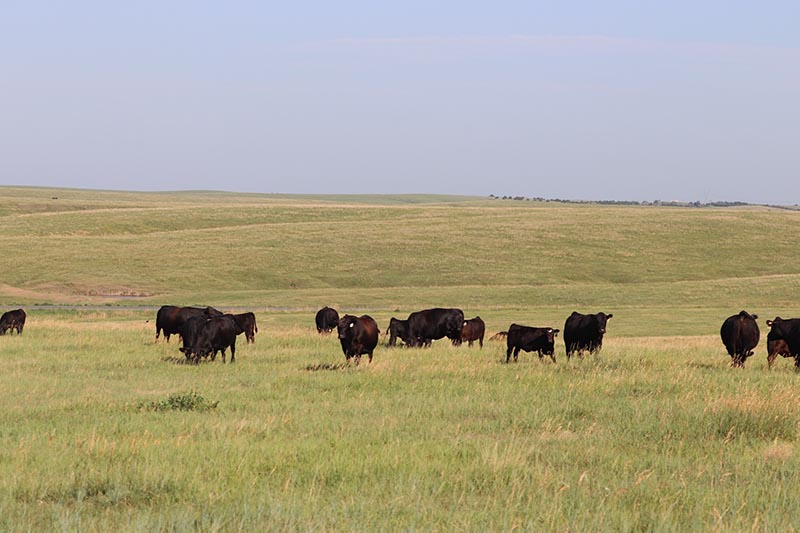
Opposite: Nebraska is the second largest beef-producing state in the US, and the Triangle J Ranch program has a major impact on the state’s seedstock and commercial producers. Above: Darby Line operates Triangle J Ranch alongside his family. Below: Triangle J Ranch utilizes many technologies, from embryo transfer and AI, to DNA testing, with the goal of multiplying their top-performing genetics.
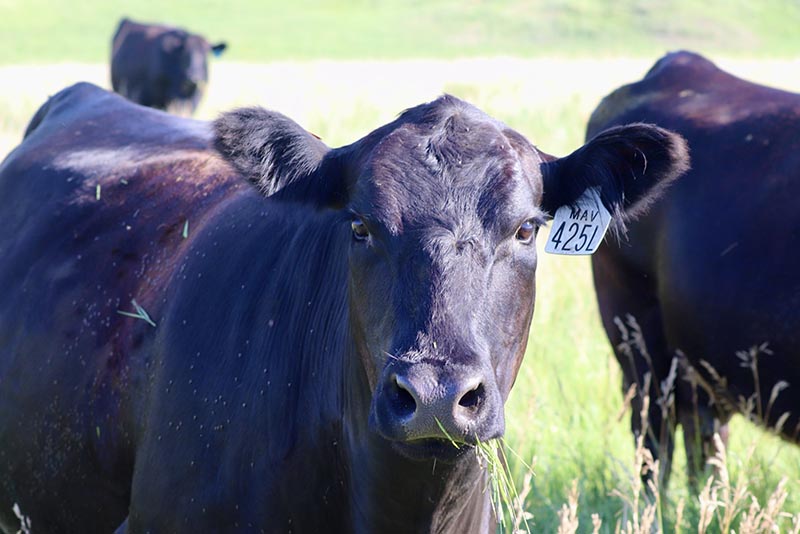
Darby recognizes that there is no single type of commercial cow herd across the region. Even within Nebraska, customers can have dramatically different environments, cow sizes, and management systems. “Everybody needs something just a little bit different,” he said.
That means the job of a seedstock producer does not end when a bull leaves the ranch. Darby spends considerable time visiting customers, particularly in the fall after their calves have had an opportunity to develop.
He wants to see what the cattle are doing outside of his own pastures. “I try to spend a month or two at least in the fall visiting customers,” Darby said. “I don’t make it everywhere, but I sure try to do my best to at least make a phone conversation with those people, or a farm visit when possible.”
Darby appreciates feedback. If a customer needs more growth, additional maternal value, or a different type of bull altogether, he wants to hear about it. The information coming back from commercial herds is another piece of the selection process at Triangle J. Artificial insemination and embryo transfer have been part of the program for years, helping Darby to multiply genetics from the females he considers the most valuable.
By combining top donor females with selected AI sires, Triangle J can make more progress in the traits it wants to emphasize. DNA testing has added another advantage to their toolbox. Darby was initially hesitant about genomic technology, but years of using DNA testing have changed his perspective. “As I’ve seen our herd grow since we started DNA testing and total herd testing, I see the differences,” he said.
The value, he explained, is apparent when comparing full siblings and embryo calves. Genetic differences that once may have taken several years to become obvious can now be identified much earlier. “You see those subtle differences among your full sibs and embryo projects, whereas maybe before it would have taken you two, three, four years to see that level of growth,” Darby said.
Even with more data available than ever, Darby does not believe the numbers should replace cattle evaluation. For Triangle J, the goal is to use the information together. “We’re not out here looking for the extremes,” he said. “We’re trying to find that balance and to find the cattle that are more in the middle.”
That mindset carries into addressing environment specifics surrounding the ranch. In central Nebraska, Triangle J sits close enough to feedlots and abundant grain resources to see what cattle can do in a high-energy finishing environment. At the same time, many of the ranch’s customers operate in the Nebraska Sandhills, where feed resources can be much more limited.
Darby sees value in having experience with both sides. “We want to make sure that we’re raising cattle that can survive in both environments,” he said.
For him, functional cattle are especially important when customers are working in tougher environments. Cattle need the ability to maintain when high-energy feed sources are not readily available.
“They have to be really sound and functional,” Darby said. “We want to eliminate those hard-doers that are not going to survive in those environments for our customers.”
The operation has begun developing TJ Feeders to help commercial customers gain more information about where their cattle go after sale and how those cattle perform through the feeding and harvest process.
Darby views the effort as a way to bridge a gap that can exist between seedstock producers, commercial producers, and the feeding sector. Connecting the dots between genetics and end-product performance gives both Triangle J and its customers information they can use to make better decisions.
Triangle J also buys back some customer calves to feed, but Darby said much of the information the operation receives comes directly from commercial customers. Those cattle provide a larger pool of performance and carcass information that can help make future decisions.
For Darby, those numbers are valuable because it brings the breeding program back to its purpose: producing cattle that work in someone else’s herd. That same idea carries into the way he approaches the future of Triangle J. If Darby could sit down with himself at 20 years old, there is one lesson he would emphasize: patience.
Looking back, he said he would have been more careful about following short-term trends and more deliberate about evaluating what fit the program. “I think just being able to analyze those things, making quicker decisions, and then following through with those decisions to make sure we stayed on course,” he said.
It is advice that seems fitting for an operation seven generations in. The cattle industry will continue to change, and Darby expects Triangle J will change with it. New technologies will bring more information. Customers will have different needs. Markets and production systems will continue to evolve.
The challenge is deciding what belongs in the program and what does not.
For Darby, that means listening, evaluating and continuing to learn. Most importantly, he wants to give the next generation something to work from. “I hope to give them some stability and guidance,” Darby said. “A solid starting point, and then it’s up to them.”
After more than 135 years in the cattle business, the goal is not to have every answer figured out. It is to leave the next generation with enough of a foundation that they can keep asking the right questions. And, perhaps, look back at the mistakes made along the way and learn from them. “Hopefully they can look back and see, ‘Hey, this is where dad made a mistake. I’ll try not to make that same one,’ Darby said. “That’s about as good as you could ask for.”
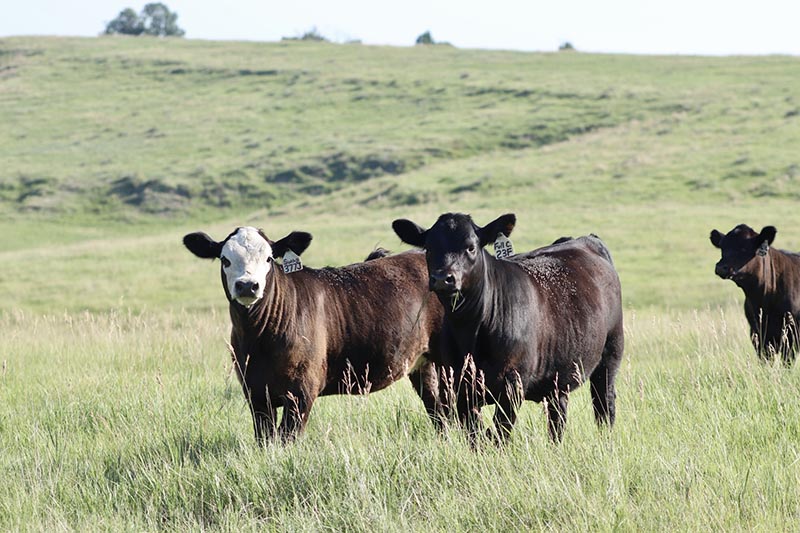
The Line family produces both Simmental and SimAngus genetics