How the AJSA Shapes Industry Leaders
by Chloe Tolar
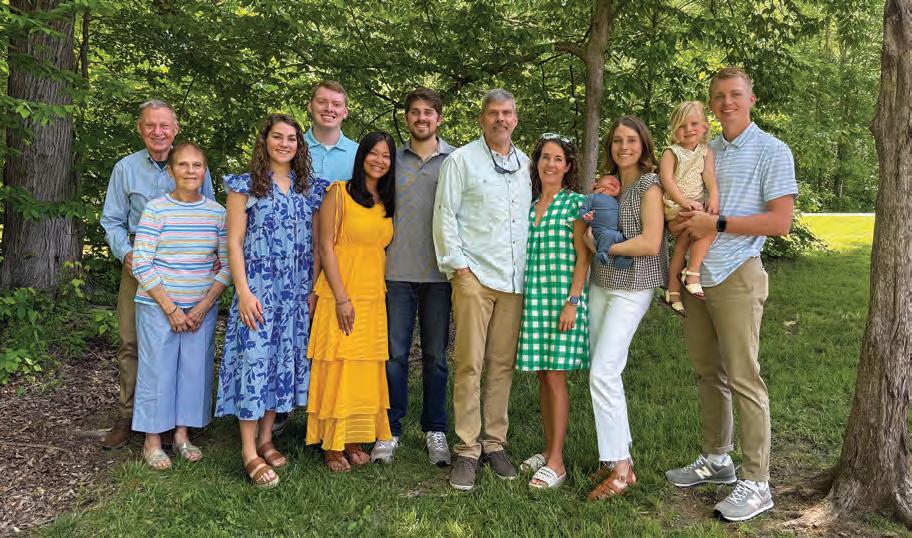
Brian Swain began showing Simmental cattle in the 1980s with his family in Murray, Kentucky. He served on the AJSA Board of Trustees and continues to raise Simmental cattle with his father and brother. He has taken the lessons learned participating in the AJSA, and continues to apply them to his daily life as a successful surgeon.
Editor’s note: This is the third article in a series highlighting the significance of the AJSA in Simmental breeders’ lives.
Tolar: When did you start participating in the AJSA?
Swain: My story with the AJSA is pretty extensive, but we started as a family. We started showing our first cattle in 1980. I was too young at that point to show, but my brother did. Then I was old enough, and we started showing together. We borrowed a Simmental heifer for that first year, and then we had Simmental cattle after that. The next year, we bought one for my brother, and then the following year, we bought one for me to show. The first National Classic we went to was in Louisville. Until I aged out, I went to every National Classic after that. It’s what we did as a family in the summertime, and really throughout the year. At that time, showing cattle was very different from what it is now. It was more of a family gathering, and much less of a competitive activity.
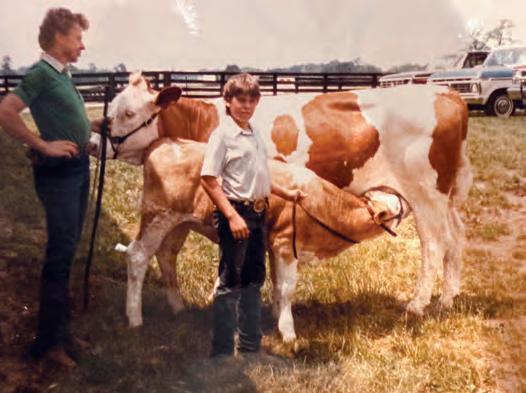
Brian Swain started showing Simmental cattle with his family when he was young.
Through all of it, the cattlemen’s quiz, judging contests, sales talk, and public speaking, from a communication standpoint, were very helpful to me. They were beneficial, developmental contests to be in. We all served as a team on the AJSA Board of Trustees, and that was wonderful. It helped me from the standpoint of leadership development, and it was a feather in my cap in terms of getting into a competitive college and then into medical school. I met my wife at a National Classic in Iowa. I have lifelong friends from the program as well. My family, my brother and my father, continue to run Swain Select Simmental, and I have my own herd. The impact that it had resulted in a lifelong love of the Simmental breed. When my kids got to the age where they could show, we started showing, and did that for a long time. Now, they’ve all aged out. My oldest daughter was on the AJSA Board as well, so that was a pretty cool legacy for me to have served, and then for her to as well.
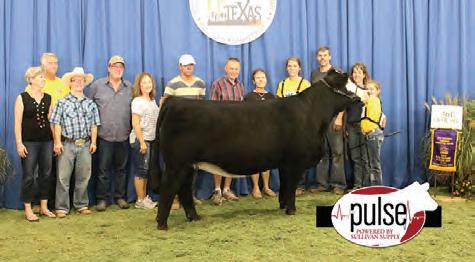
The Swain family continues raising and exhibiting Simmental cattle.
What was your favorite contest or activity as a junior?
My favorite contest was actually public speaking. It wasn’t easy, but I enjoyed the challenge of it. I enjoyed the challenge of calming myself and getting into the rhythm of the speech. It’s an equal playing field in that contest because you don’t know what your speech is going to be about ahead of time. It was extemporaneous. You learned the process of taking in that information, presenting and arguing it, and seeing the reward of doing well with it. That was definitely my favorite. I think that developing the ability to communicate and handle stressful situations was helpful to me. I went to a liberal arts college, so the ability to formulate an intelligent thesis, research information, and then talk about it and draw conclusions was beneficial. I developed a real love of that process, and it started with that contest.
How would you say that your time with the AJSA impacted your success in the cattle industry?
In terms of my professional life, I learned about struggle, success, failure, and the value of hard work. And then just the lesson of the value of learning and applying that to what you’re doing was a big part of the AJSA. The AJSA does a lot of educational things for their juniors; it’s not just about showing. In addition to showing, the kids get to learn about the beef industry and the love of Simmental cattle.
We live in Murray, Kentucky, on about 75 acres, and I run about 40 head of registered cattle here. I love it, or I wouldn’t do it, obviously. It’s a lot of work, and it’s an unusual thing for a surgeon to do, but I just haven’t been able to walk away from it. I love both parts of my life. At the farm we have here, I look out and see the cows, and this is where I go to recharge from the work that I do, which can be stressful at times.
Were there any significant scholarships, wins, or memorable moments in your time with the AJSA?
I think that my time on the Board and the people I met were pretty pivotal to me. My best memories were just being with friends. I started doing it when I was very young, and the people we did it with became close friends. Being able to just be a kid with other kids, running around and being silly, is part of the joy of being a junior. There were successes that we had showing, and then in my last year that I competed, I was second overall senior. I still hang on to my cowbells from those days.
One of the greatest things I’ve taken away from my time with the AJSA is meeting my wife in Iowa when they hosted the National Classic for the first time. We didn’t really start dating until college, but we’ve been married for almost 30 years now.
What makes the AJSA unique?
I think that what makes the breed unique is what makes AJSA unique; it’s a performance-oriented breed. They definitely have an emphasis on the commercial aspect of the industry, and specifically crossbreeding. I think that emphasis is unique in the way that they integrate data, and that spills over into the AJSA side of it, too. I think the emphasis that they’ve maintained to keep on doing multiple competitions has helped develop juniors beyond showing. If we’re developing leaders and people who understand all aspects of the beef industry, and then can participate in the competitions and grow from that, that’s just as important as anything else. I think that’s what sets the AJSA apart. Additionally, so does the utility of the breed. The maternal aspect, soundness, fertility, and more are important to maintain.
From a leadership standpoint, being comfortable speaking in front of other people and developing a love of agriculture was a key takeaway from my time. None of my kids went into an agricultural field. I think there were a lot of aspects of what they did in the AJSA that were pivotal and good for their development as adults. It’s an ongoing story because now, I have grandkids. My oldest grandchild is three and loves being out on the farm. We’re hopeful that when the time comes, she’ll be able to show.
The growth of the Simmental breed as a whole, within the beef industry, and how the junior activities have grown is pretty phenomenal from when I first started with it.
Do you have any advice for a young person who might be stepping into their first job or career?
I think that with anything you do, you should do it with excellence and integrity. Don’t just do it to seem humble, and don’t do it for yourself. Do it knowing that you’re serving a greater good, and ultimately, the Lord. No matter what you’re doing, you do it with all your heart. .